

Downsizer Super Contributions: Eligibility, Rules & Advice
Downsizing is a common step many retirees and older Australians take. Thanks to superannuation rules, it's possible to grow your super in an efficient way when doing so.
Read on to find out what you need to know about downsizer super contributions and how you can make the most of them. For more information, download our complimentary super downsizing guide.

How do downsizer super contributions work?
If you're 55 or older, you may be able to contribute up to $300,000 from the proceeds of the sale of your home to your superannuation fund. Note that some super funds do not accept these contributions.
If you sell a home as a couple, each member of the couple can contribute up to $300,000. Downsizer contributions do not count towards concessional or non-concessional contribution caps. Downsizer contributions are included in your Total Superannuation Balance (TSB), which is calculated at the end of the financial year. Your TSB dictates how you are affected by things like the new Division 296 tax.
Downsizer contributions also count towards your transfer balance cap (TBC) when your super goes into a retirement phase account.
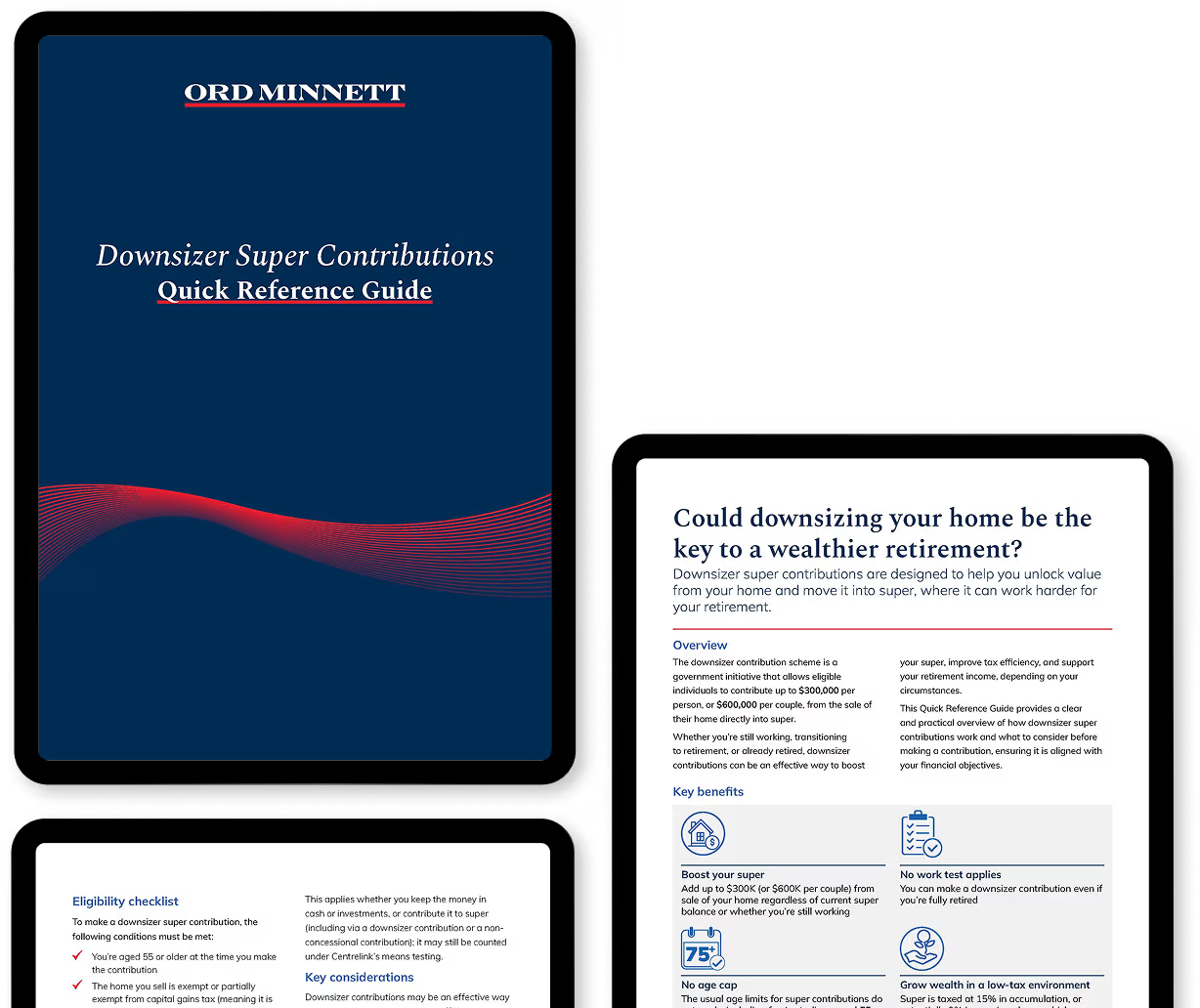
Download the Super Downsizing Guide
If you are looking for more information, we've put together a comprehensive guide to helping you understand downsizer super contributions and how they can help you on your financial journey.
Fill out the form and we'll email a copy straight to your inbox.

Am I eligible for downsizer super contributions?
To be eligible to make a downsizer super contribution, you must meet all of the following criteria:

You must be aged 55 or older when making the contribution.
Your home must have been owned by you and/or your spouse for 10 or more years before the sale. If only one spouse owned the home, the other is also eligible to make a contribution if all other conditions are met.
The home being sold must be a residential building in Australia. Proceeds from the sale of caravans, houseboats, or mobile homes are not eligible under the scheme.
The sale must qualify for the main residence capital gains tax (CGT) exemption either fully or partially. Alternatively, if the home was purchased before 20 September 1985, it must have qualified for this exemption if it were considered a CGT asset.
You must not have previously made a downsizer contribution from the sale of another home or the part sale of your current home.
You must make the contribution within 90 days of receiving the home sale proceeds. You may apply for an extension of time with the Australian Taxation Office (ATO).
How a downsizer super contribution could work for you
Here are a few examples of how different situations can play out when it comes to downsizer contributions. Please note that these examples are purely illustrative.
If you want to dive deeper into your particular circumstances, start a conversation with an Ord Minnett private wealth adviser today.

Sale circumstances
Contribution conditions
Bob sells his home for $1,000,000.
Bob can make a downsizer contribution up to $300,000 into his super.
A couple, Bob and Sarah, sell their home for $1,000,000.
Bob and Sarah can each make a downsizer contribution up to $300,000 into their super.
Bob and Sarah, sell their home for $500,000.
Bob and Sarah's downsizer contributions can't exceed $500,000 when put together, or $300,000 as individuals. For example, Sarah could contribute $300,000 and Bob could contribute $200,000.
Bob and Sarah sell their home for $1,000,000. Only Sarah is on the home's title.
As long as all other requirements for contributions are met, both Bob and Sarah can contribute up to $300,000 into their super.
Bob and Sarah sell part of their home's equity. They continue to live in the home.
Bob and Sarah's home is valued at $1,000,000. They sell 10% of the home's equity, receiving $100,000. Between the pair, they can make downsizer contributions totalling up to $100,000.
They may not make any further downsizer contributions relating to further sales of their current home, or any other home.
How Ord Minnett can help with downsizer super contributions?
Ord Minnett can offer valuable advice throughout the entire process of downsizing your home, including downsizer super contributions:
Home valuation
Our team can assist with making the right downsizing choices depending on the value of your home.
Capital gains tax and stamp duty
We'll consider the implications that downsizing can have on your CGT and stamp duty obligations.
Financial advice
We'll put together a comprehensive strategy that looks at downsizing your home and what to do with the proceeds.
Completing super contributions
Your private wealth management team will assist with strategising the best ways to contribute money from downsizing, completing relevant documents, and meeting deadlines. We'll take into consideration factors like co-spousal contributions and help you meet all downsizer contribution rules.
The value of our advice comes down to aligning the strategy to your specific goals
Ord Minnett can offer valuable advice throughout the entire process of downsizing your home, including downsizer super contributions:
Improving lifestyle
Your adviser will invest the released capital into appropriate income producing assets suited to your tax position and risk profile, modelling sustainable withdrawal rates so your money lasts as long as you need it to.
Growing the asset base
If you do not require additional income, your adviser will reinvest proceeds for a longer time horizon to support asset growth and maximise generational wealth.
Gifting to the next generation
Your adviser will consider gift timing, tax implications, and any Centrelink impacts. They will also help you identify whether gifting directly, via a trust, or through your estate best achieves your intentions without compromising your financial security.

Will a downsizer contribution affect my age pension?
Downsizing your home may impact your age pension or your eligibility to receive it. If you sell your home and buy a cheaper property, or don't buy a property at all, the additional money you now have will be counted towards Centrelink’s income and assets tests.
This applies whether you keep the money in cash or investments, or contribute it to super (including via a downsizer contribution or a non-concessional contribution) — it may still be counted under Centrelink’s means testing.
Consider whether a downsizer contribution is right for you
Downsizing contributions can be a great opportunity to maximise the benefits of selling your home. However, they aren't necessarily the right option for everybody.
Some factors you'll need to think about when considering a downsizer contribution include:
- Whether the process of downsizing is right for you and your family.
- Whether you want your contributions to be "locked" in super until a condition of release is met.
- How downsizing will affect your eligibility for the age pension.
- Whether you can meet the 90-day contribution window.
- Whether now is the right time for you to make the only downsizer contribution you can ever make in your life.


Advice for your downsizing journey
Speaking with an experienced private wealth adviser will help you determine whether downsizing contributions are right for you, and the best ways to go about making one.
Our experienced team of financial advisers at Ord Minnett has the knowledge and expertise to assist you through the downsizing process, from sale to super contributions.
With corporate origins of over 150 years and $73.4 billion in Funds Under Advice as of 31 December 2025, it's easy to see why we're trusted to help Australians protect and grow their wealth. Start a conversation with a private wealth adviser today and take control of your financial journey.
Frequently Asked Questions
How do I make a downsizer contribution?

While making a downsizer super contribution can be a fairly straightforward process, it is important that you seek expert advice to ensure you follow the steps correctly:
- Contact your super fund and make sure they will accept your downsizer contribution. If they will not, you could consider opening an account with a new super fund that does accept downsizer contributions.
- Complete the ATO's downsizer contribution into super form.
- Provide the downsizer contribution into super form before or at the time you make your contribution. If you make your downsizer contribution in multiple payments, you must provide a form for each one.
- Once you have received the home sale proceeds, pay the contribution amount into your super fund. All contribution payments must be made within 90 days of receipt of home sales proceeds, unless you receive an extension from the ATO.
What are the benefits of downsizer super contributions?
The benefits of downsizer super contributions include:
- Contribution caps: Downsizer contributions don’t count towards your concessional or non-concessional contribution caps, which can let you contribute more to super overall (subject to the separate downsizer cap of $300,000 per person). They can also be made even if you’re not eligible to make other types of super contributions.
- Tax efficiency: Downsizer contributions are not taxed when entering your fund. If your fund is in a retirement phase, earnings on contributions are generally tax-free. Downsizer contributions also generally form part of the tax-free component of your super, which is generally tax-free when paid out, including as a lump sum death benefit.
- Spousal benefits: If you sell an eligible home as a couple, you and your spouse may each be able to make a downsizer contribution of up to $300,000 (as long as you both meet the eligibility requirements and the combined contributions don’t exceed the sale proceeds).
Can downsizing your home help boost super?
Yes. Thanks to downsizer super contributions, it's possible to grow your super with a one-time contribution up to $300,000. These contributions do not count towards concessional or non-concessional contribution caps, and are highly tax-efficient.
What is the 10-year rule for downsizer contributions?
The 10-year rule for downsizer contributions refers to the fact that in order to make a downsizer super contribution, your home must have been owned by you or your spouse for 10 years or more prior to making the sale.
What is the age limit for downsizer contributions?
The minimum age to make a downsizer super contribution is 55. You must be at least 55 years old at the time you make your downsizer super contribution.
There is no upper age limit on downsizer contributions.
How do downsizer contributions affect contribution caps?
Downsizer contributions do not count towards concessional or non-concessional contribution caps. However, they are included in your Total Superannuation Balance (TSB), which may affect your eligibility to make certain future contributions (for example, non-concessional contributions) under the separate rules that apply.
Does the property need to be my home at the time of sale?
No, the property you sell to make a downsizer contribution does not need to be your home at the time of sale. However, it must either fully or partially qualify for the main residence CGT exemption.
When does the 90-day requirement to make the contribution start?
Your downsizer contribution typically must be made within 90 days of receiving the home sale proceeds. This usually occurs at settlement.
You can apply for your extension by phoning the ATO on 13 10 20. Please note that you cannot receive an extension on the 90-day requirement for the purposes of meeting the age requirements of a contribution.
Do I need to purchase another home after selling?
No. Purchasing another home is not a requirement of making a downsizer super contribution.
Can I make multiple downsizer contributions?
No. You can only make one downsizer contribution in your lifetime. However, both you and your spouse can make downsizer super contributions of up to $300,000 each when you sell a property.
Are downsizer contributions tax deductible?
No, downsizer contributions are not tax deductible. However, downsizer contributions are otherwise highly tax-efficient, with no tax paid when the contribution is made or when generating investment returns in your super fund (if it is in a retirement phase).
Can I withdraw downsizer contributions?
Once a downsizer contribution is made, it is subject to the same preservation rules as the rest of your superannuation. You can withdraw the funds when you meet a condition of release.
Conditions of release include reaching the age of 65, or retiring after you turn 60..
Are downsizer contributions taxed when withdrawn or paid as a death benefit?
Downsizer contributions generally form part of the tax-free component of your super. This means they’re generally tax-free when paid out, including as a lump sum death benefit. (Tax may still apply to other parts of your super, depending on the circumstances.)
Start a
Conversation
Whether it’s the first time you’ve sought advice, or you're looking for a fresh perspective, our advisers will help you gain clarity, confidence and opportunity.


.webp)